Day 1 of 3 · Overthinking

Untangle

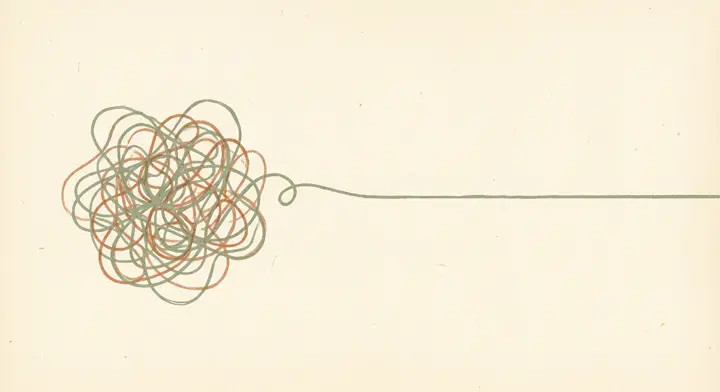
Quiet the overthinking loop

Overthinking feels like problem-solving, but mostly it is the same thought on repeat. Today is about slowing the body down, getting the loop out of your head and onto paper, and giving worry a place to live that is not all day long.

~13 minutes 3 exercises

Nothing you type on this page is saved.

Box breathing reset

3 min

Why it helps: Slow, even breathing activates the parasympathetic nervous system and tells your body it is safe — which makes racing thoughts easier to step back from.

  1. 1.Sit with your feet on the floor and soften your shoulders.
  2. 2.Follow the circle: breathe in for 4, hold for 4, out for 4, hold for 4.
  3. 3.Complete at least 6 rounds. If your mind wanders, just return to the count.

Follow the circle: in for 4, hold for 4, out for 4, hold for 4. Aim for 6 rounds.

Brain dump & sort

8 min

Why it helps: Thoughts held in working memory keep circling. Writing them down offloads them, and sorting what you can and cannot influence stops wasted rumination.

  1. 1.Write every worry, task, and nagging thought — one per line, no editing.
  2. 2.Sort each one: is it something you can act on, or outside your control?
  3. 3.For one item you can act on, write the very next tiny step.

Nothing here is saved — use your own notes app if you want to keep the list.

Set a worry window

2 min

Why it helps: Worry postponement is a well-studied technique: giving worry a fixed 15-minute slot teaches your brain it does not need to deal with everything right now.

  1. 1.Pick a 15-minute slot later today (not right before bed).
  2. 2.When a worry pops up before then, note it and tell yourself “later”.
  3. 3.At worry time, go through the list. Many items will have lost their grip.

Nothing here is saved — use your own notes app if you want to keep the list.

Suggestions for today

Pick one or two that feel doable. No need to do them all.

Name the thought

Try “I’m noticing the thought that…” in front of a worry. It creates a small gap between you and the story your mind is telling.

Move before you decide

A 10-minute walk changes your thinking more than another 10 minutes of analysis. Decide after you move.

Cap the inputs

Set a single check-in time for news and messages today. Fewer inputs means fewer seeds for new loops.

Ask: is this useful?

If a thought is leading to a next step, follow it. If it is the fifth lap of the same track, it is rumination — and you are allowed to put it down.

When you’re ready

Finish the exercises above at your own pace. Ideally, sleep on it before starting the next day.

3-2-1-reset offers self-help practices, not medical advice or a diagnosis. If you are struggling, please talk to a doctor or therapist. If you are in crisis or thinking about harming yourself, call your local emergency number, or in the US call or text 988. Find a helpline in your country at findahelpline.com.